
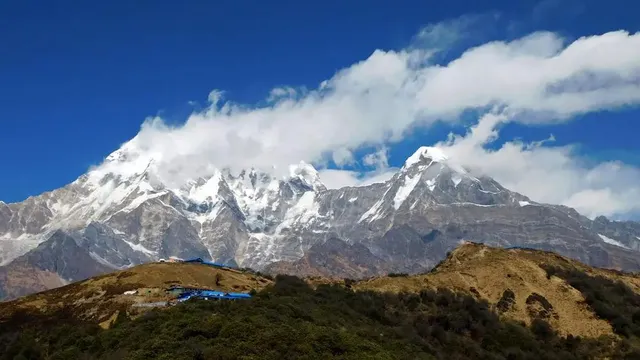
Nepal is often associated with Mount Everest and the famous Everest Base Camp Trek, but the country has far more to offer beyond its highest mountain. From remote Himalayan valleys and ancient settlements to peaceful lakes, hidden trails, and culturally rich mountain communities, many remarkable places remain outside the usual tourist routes. Some require longer journeys, while others are simply overlooked by travelers who focus on Kathmandu, Pokhara, Chitwan, and Everest.
For travelers willing to go beyond the familiar, Nepal offers a different kind of adventure. These places are quieter, less commercial, and often provide a closer connection to local communities and landscapes.
Here are 10 places to explore when you want to discover Nepal beyond Everest.
1. Tsum Valley
Tsum Valley is one of the most fascinating hidden valleys in Nepal.
Located in the northern part of the Gorkha district, the valley sits close to the Tibetan border and is surrounded by dramatic Himalayan peaks. The area remained relatively isolated for centuries, helping preserve its distinctive Tibetan Buddhist culture.
The trek through Tsum Valley takes you through traditional villages, ancient monasteries, mani walls, chortens, and fields carved into the mountain slopes. Villages such as Chumling, Chhokangparo, and Nile provide opportunities to experience a slower and more traditional way of life.
One of the highlights is Mu Gompa, a remote monastery located near the upper end of the valley.
The valley is often combined with the Manaslu Circuit, making it possible to experience two remarkable trekking areas in a single journey. While the Manaslu Circuit is known for its challenging mountain trails, Larkya La Pass, and views of Manaslu, the Tsum Valley offers a quieter cultural experience with fewer trekkers.
Unlike some of Nepal's busier trekking routes, Tsum Valley receives fewer visitors. This gives the journey a more peaceful character and allows travelers to spend more meaningful time in local villages.
The valley is especially appealing to travelers who want mountain scenery combined with culture rather than simply chasing high viewpoints.
2. Nar Phu Valley
Nar Phu Valley is another remote destination in the Annapurna region that feels far removed from the better-known trekking routes.
The valley lies north of the Annapurna Circuit and was opened to foreign trekkers only in 2002. Its relative isolation has helped preserve traditional villages, Buddhist monasteries, and an ancient Tibetan-influenced way of life.
The trail passes through narrow gorges, forests, high pastures, and dramatic mountain landscapes before reaching the villages of Nar and Phu.
Phu village is particularly striking. Its stone houses appear to rise directly from the surrounding cliffs, creating a landscape that feels almost untouched by modern development.
The journey can be physically demanding, especially at higher elevations. Trekkers need proper acclimatization and preparation.
For travelers who have already experienced popular areas of Nepal, Nar Phu offers something different: a remote Himalayan experience where culture and landscape are equally important.
3. Khopra Ridge
Khopra Ridge is a lesser-known trekking destination in the Annapurna region and an excellent alternative for travelers who want spectacular mountain views without the crowds found on some of Nepal's most popular trails.
The route takes trekkers through forests, traditional villages, and high alpine landscapes before reaching Khopra Ridge.
From the ridge, the views extend toward Dhaulagiri, Annapurna South, Fang, and other Himalayan peaks.
One of the most rewarding side trips is the hike toward Khayer Lake, a sacred alpine lake situated at a much higher elevation. This additional journey is demanding, so it requires good physical preparation and careful pacing.
Khopra Ridge is also known for its community-based approach. Travelers can stay in community lodges and experience a quieter side of the Annapurna region.
For those who want Himalayan scenery, village life, and a less crowded trail, Khopra Ridge is worth considering.
4. Lower Dolpo
Lower Dolpo is one of Nepal's most remote trekking destinations.
Located in western Nepal, the region is known for rugged mountains, high-altitude landscapes, turquoise lakes, traditional villages, and ancient Buddhist culture.
The area gained international attention through the book and film Himalaya: The Childhood of a Chief, but it remains far less visited than Everest and Annapurna.
One of the best-known attractions is Phoksundo Lake, a spectacular blue lake surrounded by steep cliffs and mountains. The lake is located within Shey Phoksundo National Park, an area known for its exceptional natural beauty.
The trek to Lower Dolpo is not an easy journey. The region is remote, transportation options are limited, and the trails cross high passes.
That difficulty is part of the appeal.
Travelers who make the effort can experience a landscape that feels dramatically different from the more developed trekking corridors of central Nepal.
5. Rara Lake
Rara Lake is one of Nepal's most beautiful natural destinations and one of the country's best options for travelers seeking a quieter experience.
Located in Mugu district in western Nepal, Rara is the largest lake in Nepal. It sits within Rara National Park and is surrounded by forested hills and distant Himalayan landscapes.
The lake's deep blue and turquoise colors change with the weather and light, creating a constantly changing landscape.
Getting to Rara takes more effort than visiting better-known destinations such as Pokhara. That extra journey helps keep visitor numbers relatively low.
Once there, travelers can walk along the lakeshore, hike to viewpoints, explore surrounding forests, and simply enjoy the peaceful atmosphere.
Rara is particularly attractive for travelers who want to combine nature and relaxation rather than complete a demanding high-altitude trek.
It also provides an opportunity to explore western Nepal, a part of the country that many international visitors never reach.
6. Panch Pokhari
Panch Pokhari, meaning "Five Lakes," is a spectacular high-altitude destination in Sindhupalchok district.
The five sacred lakes sit surrounded by mountains and rugged landscapes. The area has religious significance for both Hindu and Buddhist communities.
The trek to Panch Pokhari passes through forests, mountain villages, and highland landscapes. As the trail gains elevation, the scenery becomes increasingly dramatic.
The destination is particularly attractive during clear weather, when the surrounding Himalayan peaks can be seen from viewpoints above the lakes.
Compared with popular trekking routes, Panch Pokhari receives relatively few international visitors.
This makes it a good option for travelers who want a genuine mountain experience without the busy teahouse atmosphere found on some of Nepal's established trails.
The journey also provides opportunities to experience rural communities and traditional lifestyles close to Kathmandu while still feeling far removed from the capital.
7. Sailung
Sailung is an excellent destination for travelers who want mountain scenery without committing to a long, high-altitude trek.
Located east of Kathmandu, the region is known for its rolling hills, grasslands, forests, and panoramic mountain views.
On clear days, visitors can see several Himalayan ranges stretching across the horizon.
The landscape is particularly beautiful in spring, when rhododendrons and other flowers add color to the hills.
Sailung is also culturally significant. The area is associated with Tamang communities, and travelers can experience local traditions, food, architecture, and village life.
Because of its accessibility, Sailung works well for short hikes, weekend trips, and travelers who want to experience rural Nepal without spending weeks on a trekking route.
It demonstrates that you do not always need to travel deep into the Himalayas to experience something special.
Sometimes a quieter hill destination close to Kathmandu can provide exactly what you are looking for.
8. Limi Valley
Limi Valley is one of the most remote destinations in Nepal.
Located in Humla in the far northwest, the valley sits close to the Tibetan border and is surrounded by rugged Himalayan terrain.
The region is known for its ancient villages, Buddhist monasteries, traditional stone houses, and strong Tibetan cultural influence.
Villages such as Til, Halji, and Jang offer glimpses into a way of life that has remained closely connected to the surrounding landscape.
The journey to Limi Valley is challenging. Travelers need considerable time, good logistics, and appropriate preparation.
That remoteness is exactly what makes it special.
There are no large crowds, developed tourist centers, or busy trekking streets. Instead, visitors encounter a remote mountain environment where local communities remain central to everyday life.
For experienced trekkers and travelers looking for genuine exploration, Limi Valley offers an entirely different perspective on Nepal.
9. Khaptad National Park
Khaptad National Park in far-western Nepal is another destination that receives relatively little international attention.
The park covers forests, grasslands, hills, and high-altitude landscapes. Its peaceful environment makes it particularly appealing to travelers who want to spend time in nature.
Khaptad is also associated with Khaptad Baba, a respected spiritual figure who spent many years meditating in the area.
The park has religious and cultural importance in addition to its natural attractions.
Travelers can hike through forests, explore open meadows, visit religious sites, and experience the quiet atmosphere of far-western Nepal.
The region is also home to a variety of plant and animal species.
Visiting Khaptad requires more planning than many popular destinations, but that is part of its charm. You are not traveling there for a crowded tourist experience.
You are traveling to slow down and experience a less-visited part of the country.
10. Olangchung Gola
Olangchung Gola is a remote mountain settlement in eastern Nepal's Taplejung district.
Located near the Tibetan border, the village is surrounded by dramatic Himalayan landscapes and has a long history of trade and cultural connections across the region.
The settlement is part of the Kanchenjunga region, one of Nepal's most spectacular mountain areas.
The journey to Olangchung Gola is challenging and requires proper planning. Roads and trekking infrastructure are much less developed than in the Everest and Annapurna regions.
That remoteness provides a very different travel experience.
Visitors can explore the traditional settlement, interact with local communities, and experience the rugged landscapes of eastern Nepal.
The area is also an excellent choice for travelers interested in exploring the Kanchenjunga region beyond its better-known trekking routes.
For those who want to see a side of Nepal that few international travelers experience, Olangchung Gola is a remarkable destination.
Why Explore Nepal Beyond Everest?
Everest is an important part of Nepal's identity, but it represents only one part of the country.
The popularity of the Everest region means that many travelers follow similar routes and experience similar highlights. There is nothing wrong with that. The Everest Base Camp Trek remains one of the world's great mountain journeys.
However, Nepal becomes even more interesting when you look beyond its most famous destination.
The country's geography creates enormous variety. You can find subtropical forests, middle-hill villages, high Himalayan valleys, sacred lakes, national parks, and remote settlements within one country.
Each region also has its own culture.
Sherpa communities in the Everest region, Gurung and Magar communities in the Annapurna area, Tamang communities around central Nepal, and Tibetan-influenced communities in remote northern valleys all contribute to Nepal's cultural diversity.
Traveling beyond the main routes also changes the pace of your journey.
You may spend more time in small villages. You may encounter fewer trekkers. You may stay in simple lodges or homestays. You may have to travel longer distances to reach your destination.
These challenges can become some of the most rewarding parts of the experience.
What to Consider Before Visiting Remote Nepal
Remote travel requires more preparation than visiting established tourist destinations.
Check the best season before traveling. Weather can significantly affect mountain trails, roads, and flights.
You should also understand the level of physical difficulty involved. Some destinations on this list involve high-altitude trekking, while others are better suited to shorter hikes.
Permits are another important consideration. Several restricted or conservation areas require special permits and, depending on the route, travelers may need to trek with a licensed guide or follow specific local regulations.
Travel insurance that covers trekking at the elevations you plan to reach is also important.
Finally, allow extra time. Remote Nepal does not always operate on the same schedule as major tourist centers. Transportation can be affected by weather, road conditions, and other factors.
A flexible itinerary will make the journey much more enjoyable.
Conclusion
Nepal is much bigger than Everest.
The country offers countless opportunities for travelers who are willing to leave the most familiar routes behind. Tsum Valley offers ancient Buddhist culture, Nar Phu reveals remote Himalayan villages, and Khopra Ridge provides spectacular Annapurna views with fewer crowds. Further west, Rara Lake, Lower Dolpo, and Limi Valley reveal landscapes and communities that few international travelers ever experience.
Destinations such as Panch Pokhari and Sailung show that hidden experiences can also be found closer to Kathmandu, while Khaptad and Olangchung Gola invite travelers to explore Nepal's less-visited western and eastern regions.
The best part of traveling beyond Everest is not simply avoiding crowds. It is discovering a different side of Nepal.
If Everest introduces you to the Himalayas, these lesser-known destinations show you just how much more there is to discover.